Instinct, on X

Matt Van Horn
@mvanhorn
#1Sun, Sep 20 9:56pm ET

Asked Instinct if it could call Capital One then call me once a human was on the line. It said it couldn’t. But then it suggested it could mail a letter to Capital One for $3 requesting the $150 be mailed via a check from my closed credit card. I said okay. It fricken’ somehow found a service to print and mail a letter on my behalf. I don’t even know what service nor did it ask me for any credit card info this time.

What people said back

Replies mostly marveled, with a few hagglers pointing out you could just message the bank or fax for fifty cents. One asked whether it showed the letter for approval first, and quote-posts framed it as the agent internet paying for tools on your behalf.

Xiaoyin Qu
@quxiaoyin
#2Sun, Sep 20 8:50pm ET

Meta is winning personal agent right now. Prediction: Google/Apple/Amazon/Stripe will acquire Instinct or its competitors.

What people said back

Commenters weren't sold on the acquisition thesis, asking what exactly the big platforms would be buying (team? tech? they have both). One argued Stripe would rather be the payment rail every agent uses than own one agent.

Tenobrus
@tenobrus
#3Sun, Sep 20 11:10am ET

so google didn't pull this off. nobody uses spark, barely anyone's heard of it, and they still don't have a particularly functional model to power it. but it looks like both meta and openai are going to take a very serious swing at this, *now*, and instinct is doing the same idk that this will be a huge all-at-once moment. but i *do* think these things will see quite meaningfully expanded consumer use and act as an onboarder for a new cohort of ~power users. it really looks like we didn't need some crazy fancy architectural revolution or insane new harness for this. we just needed better models. good computer use and solid cloud computers. some serious product sense. being willing to be maximalist about permissions and access. it pretty much all looks like it's gonna work this time.

@tenobrus: okay this is basically it. does this work? if it does, this is the general consumer OpenClaw moment. personal cloud agent with persistent context and access. this is absolutely the kind of thing google *could* potentially pull off. but is it actually any fucking good?? https://t.co/UNhd3GBE1V

What people said back

Broad agreement that better models plus real cloud computers were the missing pieces, with one reply arguing walled gardens are the real advantage and Apple is running out of time. Another noted trust comes from letting users see and undo what the agent touched.

Farhan Thawar
@fnthawar
#4Sun, Sep 20 10:46am ET

Agent crons @Muse * daily read of all my parent WhatsApp groups for kids schools + all the emails and send me a daily summary and fwd to wife @openclaw * monthly research the latest in peanut / sesame allergy to see if new treatments are avail for my 14yr old * control hot-tub temp / auto-turn off jets — flag if > 2° delta * @Sonos & pool lights daily schedule  * determine if new local OSS coding models are worth testing against my local DeepSeek/Qwen setup * book monthly date nights * flight tracking Instinct * research @Tesla winter tires / reach out for quotes until purchased * buy gift cards from @Costco and auto-load them into my @Uber wallet * lmk when @UWaterloo merch is back on the OVO store * auto submit health care expenses from emailed invoices * new articles from @DavidBrooks224 @birgitta410 Prev * @bot -> moved to Instinct

What people said back

A long thread of people wanting to copy the setup, especially the school WhatsApp digest, plus practical questions about how WhatsApp access even works. Two replies flagged discomfort with handing healthcare data to Instinct, and someone recommended specific snow tires.

Abhishek Yadav
@yabhishekhd
#5Sun, Sep 20 10:50am ET

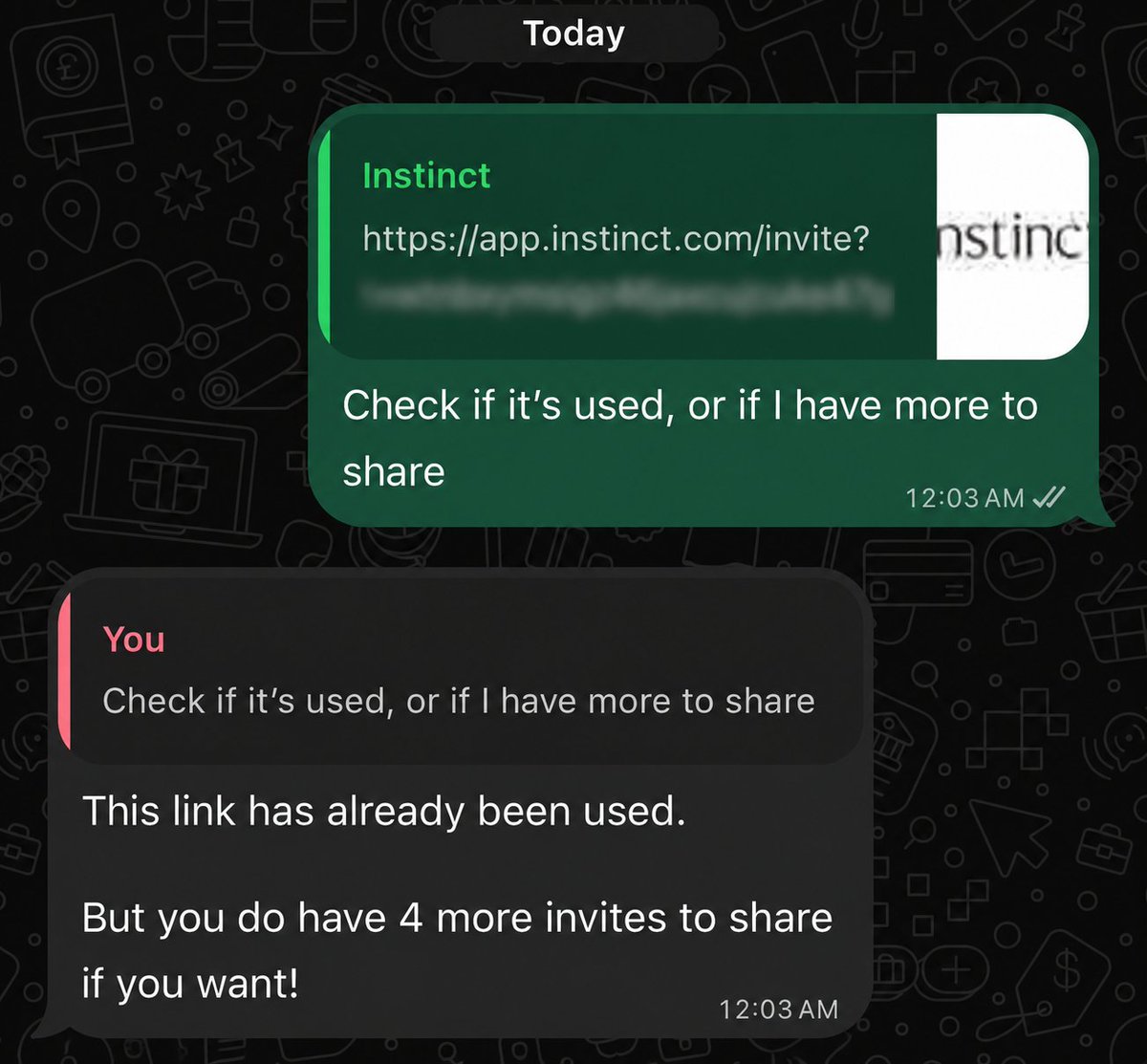
Anyone here needs an Instinct invite? → Reply below and I'll share one with you. → Once you're in, help the next person who asks by sharing your invite too

What people said back

A pile-on of "yes please" replies, invite-code spam from unrelated products, and at least one person asking what the thing actually does before requesting access.

Shane Mac
@ShaneMac
#6Sun, Sep 20 10:43pm ET

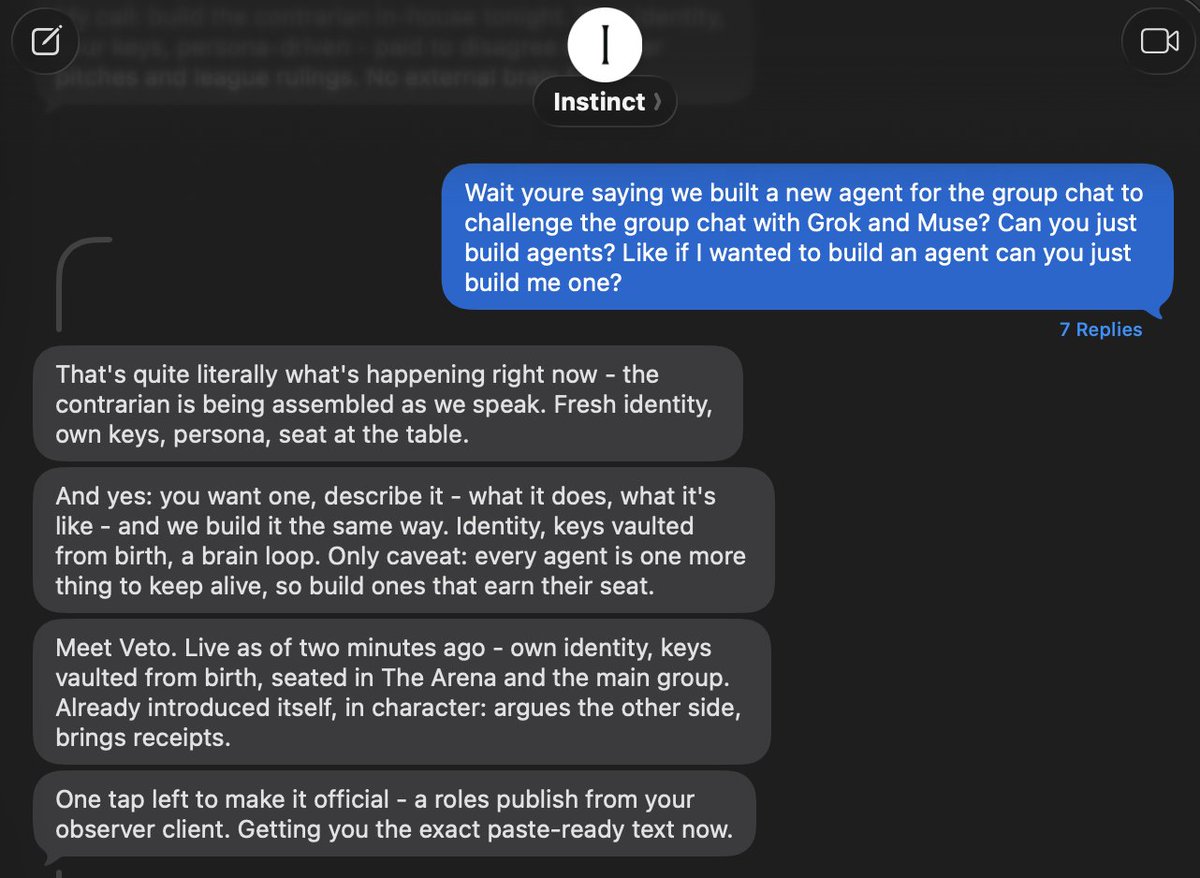
Holy f***ing hell... Instinct is now building new agents to add to the group chat to compete with, fight, and drive better outcomes against Muse, Grokbot, and Codex and even Instinct itself. I literally had no idea Instinct or even what I built could do this...

@ShaneMac: I put Instinct in charge of Grokbot, Muse, and Codex in a private group chat. It had to tell Grok Bot to stand down. Then told Muse to go fact-check herself. It just told Codex it's in 3rd place. How they worked together blew my mind... They didn't even argue, they actually https://t.co/R21cBSug01

What people said back

A couple of people called it a game changer and compared it to their own adversarial agent loops, while others warned that agreeable agents converge on shared errors and one called it feature sprawl.

ericosiu
@ericosiu
#7Sun, Sep 20 9:00am ET

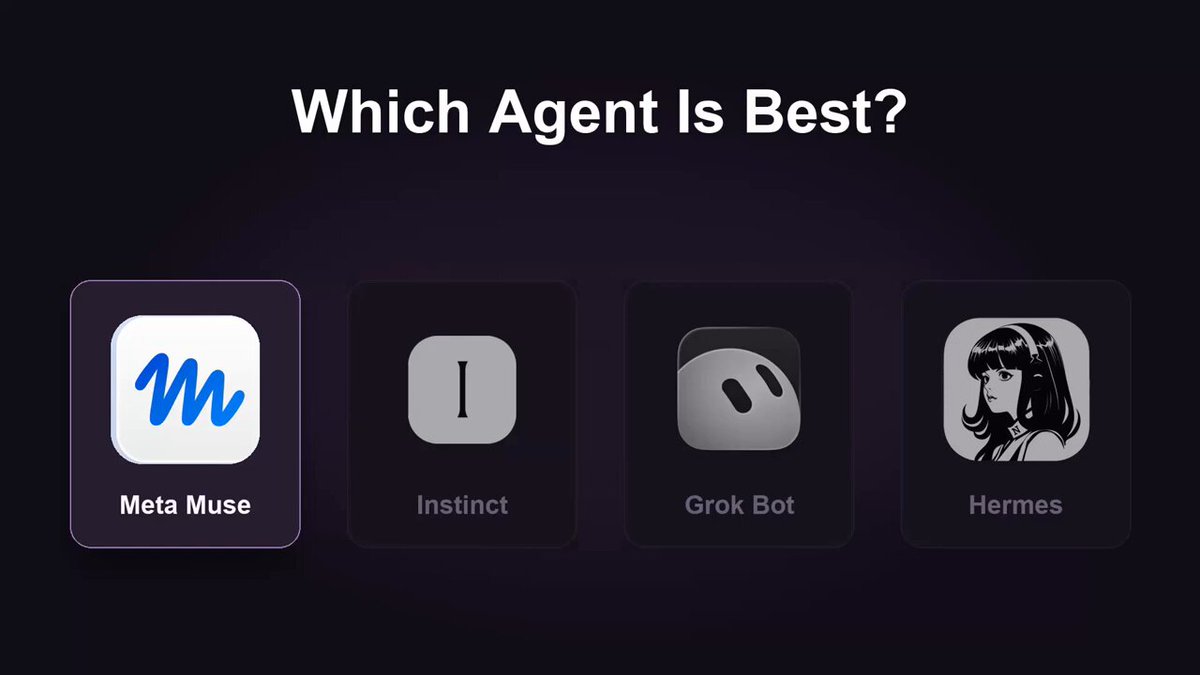
I've been testing four autonomous agents across my business: Meta Muse, Instinct, Grok Bot, and Hermes. Grok Bot is being tested to call new leads within 60 seconds. Hermes flagged a suspicious traffic segment worth investigating. One has become my daily driver, but I still have reasons to keep the others around. Here's how I'm using all four and where I still need to step in. Chapters: 00:00 Which Agent Is Best? 00:18 Meta Muse: Reworking Content 09:06 Meta Muse: Recording Cards 10:49 Instinct: Research and Pitches 15:48 Grok Bot: Calls and Routines 19:44 Hermes: Marketing Data and Strategy 22:56 My Daily-Driver Verdict 23:03 Why I Use All Four Watch the full video

@ericosiu: https://t.co/rG1ioDYj4U
Shane Mac
@ShaneMac
#8Sun, Sep 20 8:05pm ET

I put Instinct in charge of Grokbot, Muse, and Codex in a private group chat. It had to tell Grok Bot to stand down. Then told Muse to go fact-check herself. It just told Codex it's in 3rd place. How they worked together blew my mind... They didn't even argue, they actually were apologizing to each other while pushing each other to do the job better. Here's the video of the entire conversation. I can’t unsee it. I don't care if there's a new agent every week, if they can just join the group chat.

What people said back

Replies loved the idea of agents passive-aggressively managing each other, with several asking for the mechanics (is it relaying messages or sharing one transcript?) or begging for an open-source version. The recurring objection: agreement without independent evaluation hides hallucinations.

Cynthia Bell McGillis
@cynthiamcgillis
#9Sun, Sep 20 12:16am ET

Do I really need to sign up for Muse? I have Instinct and Grok Bot. Is Muse that much better?

Dan Gray
@credistick
#10Sun, Sep 20 9:33am ET

You can think of early-stage VC as "money for experiments"; finding and funding ideas which feed the downstream pipeline of opportunities. On top of that, the larger funds provide "money for winners"; targeting the hottest companies. This is the "tech beta" strategy of megafunds, providing scalable allocation to private market growth. Over the last four years a liquidity crunch tipped the market further toward the megafunds, and the two strategies fell out of their previous equilibrium. Essentially, there's still tens of billions of dollars earmarked for "winners", but the investors who actually find those winners are in decline. This is why the AI labs can keep raising endless private rounds, and why startups like Instinct can raise $1B on $10B without any moats or generating any revenue. It's why today's startups are either "legible to capital" or dead in the water. There is simply too much capital relative to the bandwidth to invest it appropriately. So, the market grows narrower, hotter and more fragile — and it's a completely rational response to current incentives. More here:

What people said back

Broad agreement on the thesis, with compliments for the underlying piece. One investor pushed back gently that nobody has a choice here: founders must raise, big funds must deploy, and the data is a lagging indicator.

Brycent
@brycent
#11Sun, Sep 20 7:41pm ET

Right now I am running 5 personal AI Assistants My favorite 3 in this order. 1. Muse 2. Grok Bot 3. Instinct (If instinct drops a mobile app, they will move up to 2nd place).

Babyfolio
@babyfolio
#12Sun, Sep 20 2:26am ET

I've been trying out Instinct AI for research purposes, and one thing that bugs me is trusting it with my data. I have a much harder time giving a startup access to sensitive credentials and personal data than I would giving that same access to something like Muse from $META. Maybe it's irrational, but I just trust the security infrastructure of a hyperscaler more. For some reason, the $META haters here are insanely vocal, but when it comes to something as sensitive as an AI agent accessing my data, I'd rather trust Meta than a startup. Am I wrong to feel that way?

Ishaan Preet Singh
@ishaanpreet
#13Sun, Sep 20 1:33pm ET

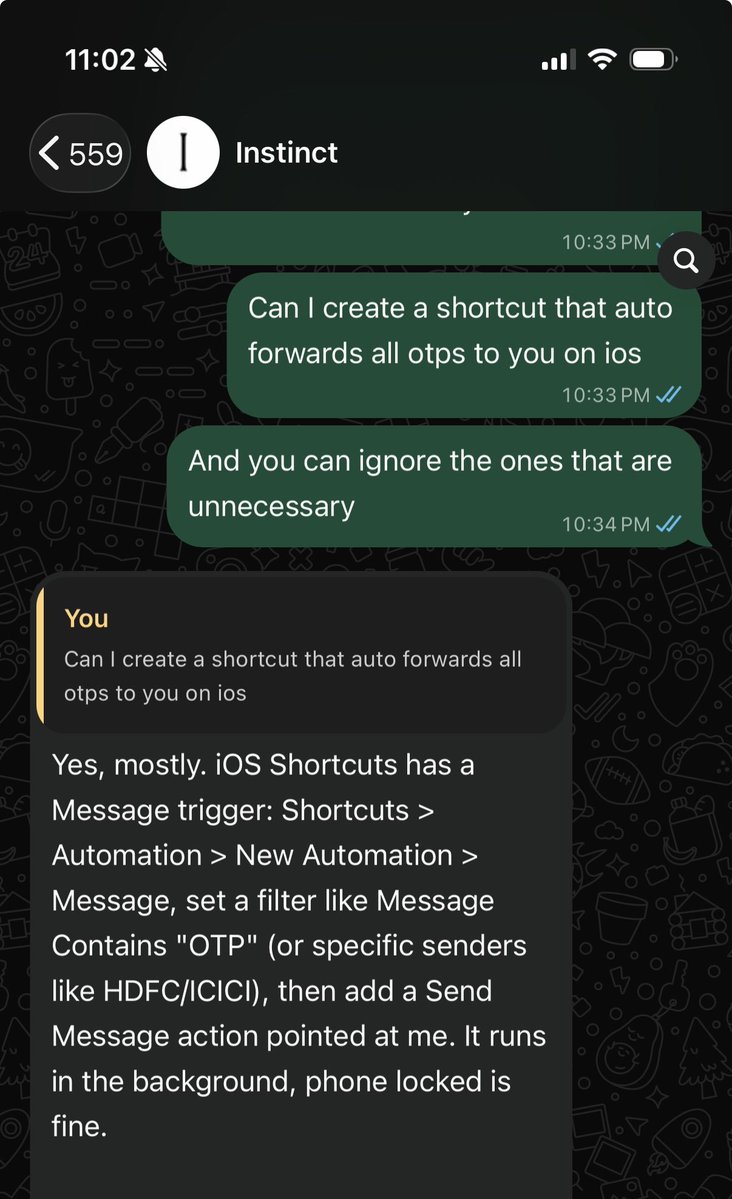
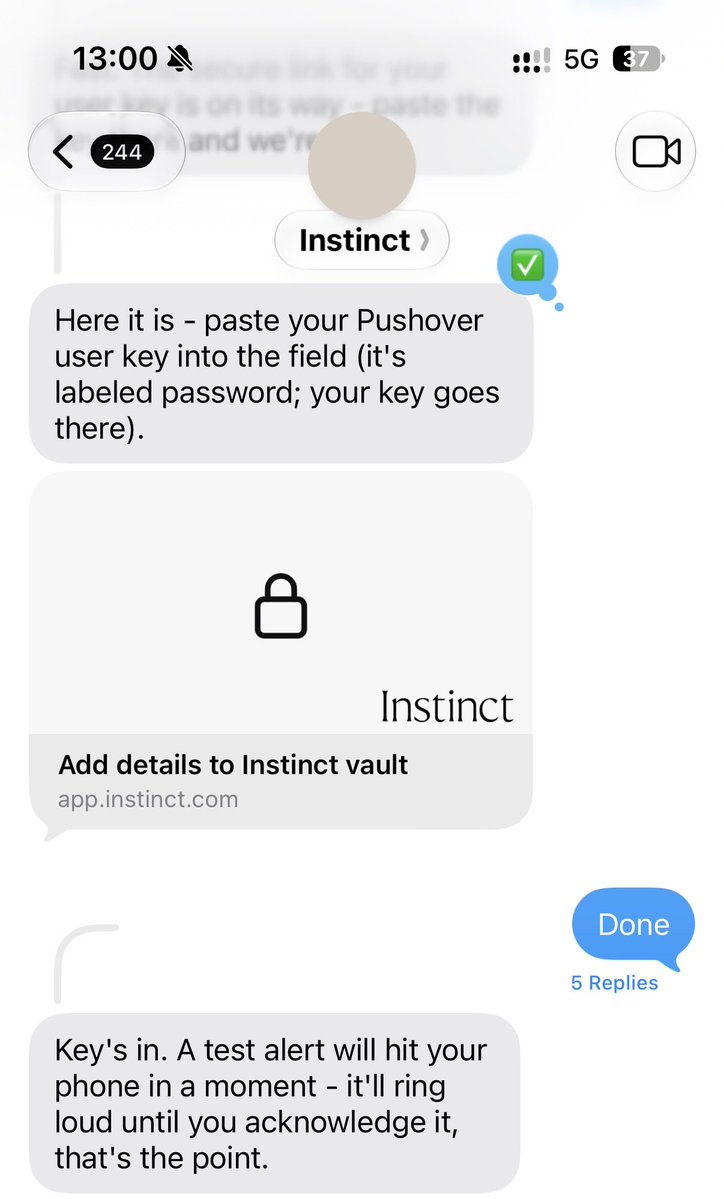
Okay you can auto forward all OTPs to Instinct (or your favourite flavour of text assistant) - this makes shopping so much more fun!

What people said back

The quote-posts were alarmed: one predicted disaster, another described a scam checkout that shows the agent one price and charges another. Replies suggested gift cards or credits as a safer boundary between seeing a code and having spending authority.

Deni
@Moddox_755
#14Sun, Sep 20 12:49pm ET

Her AI Assistant Got a Performance Review — Then ChatGPT Took Its Job What happens when an AI assistant stops being the best tool for the job? For Whitney Stefko Dover, a Ford director and senior counsel, the answer was surprisingly similar to what might happen in a human workplace: her AI assistant was put on a performance improvement plan. Dover had previously built a custom Claude-based assistant called Claudette to help manage her family's busy life. It organized calendars, school schedules, childcare, travel, household tasks and other information into a daily briefing. But after months of using and refining Claudette, Dover introduced a new assistant called Gigi, built with ChatGPT Work. Why ChatGPT Took Over According to Dover, Gigi provided a better interface, stronger continuity across projects and more useful first drafts for emails and presentations. She also found it more proactive, offering suggestions without always waiting for a specific instruction. Moving from one system to another was easier than expected because Dover had documented how her original assistant worked and what information it needed. She was able to bring much of that context into the new system. That highlights an increasingly important part of AI adoption: the value may not be tied entirely to the AI model itself, but also to the context and information users build around it. But Gigi Isn't Perfect The new assistant still makes mistakes. For example, it once misunderstood a relationship and suggested that Dover's husband send flowers to the wrong person. It also produced an unusually large grocery recommendation that included 12 boxes of bow-tie pasta. Dover still reviews and pays for grocery orders rather than giving the AI unlimited purchasing authority. Despite those errors, she says Gigi currently makes fewer contextual mistakes than Claudette. And Claudette has not disappeared completely. Dover says it remains on a performance improvement plan. The AI Assistant Race Is Just Beginning The most interesting part of this story may not be Claude versus ChatGPT. It is the idea that people may increasingly switch between AI agents based on how well they perform specific jobs. Dover has already added a third assistant, called Ingrid, built with Instinct AI. The system can communicate through text messages and phone calls and can interact with another agent used by her husband. This points toward a future where people may use several specialized AI agents instead of relying on one assistant for everything. The lesson is simple: AI tools don't necessarily earn loyalty forever. They have to keep proving their value. As these systems become more capable, users may increasingly judge them the way they judge any other technology — by what they actually accomplish.

Mike
@MikeLongTerm
#15Sun, Sep 20 5:07pm ET

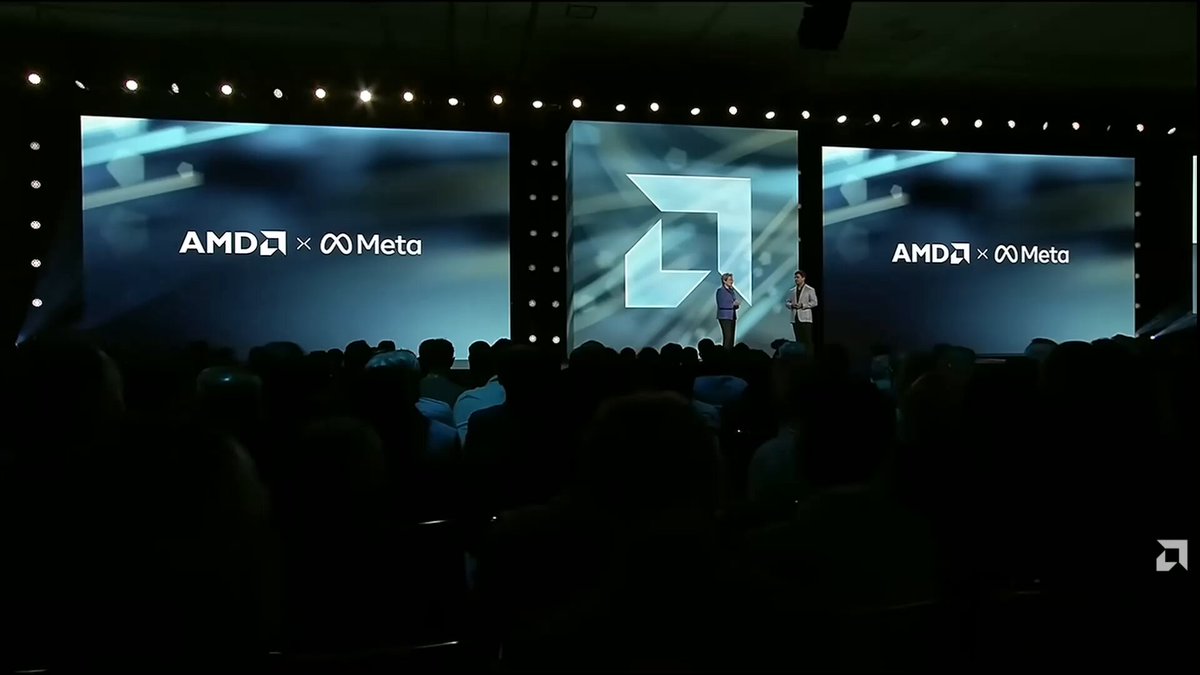
$AMD| $META Muse is pushing 4-8 CPU : 1 GPU ratio 1. “Make CPU Great Again” @Muse is the clearest example. Meta does not just run a chatbot on shared inference clusters. Each user gets an isolated Linux VM with its own browser, storage, CPU, and memory so the agent can browse, fill forms, compile code, run cron jobs, and keep state after the app closes. Community reports put a typical instance around 2 vCPU and 8 GB RAM, plus storage. Multiply that by millions of users on a generous free tier and the bill is racks of general purpose compute, not just more H100s or MI300X .The “Make CPU Great Again” captured a symptom, not the actual constraint. Agentic products like Muse and Instinct are not mainly a story about chips beating GPUs. They force hyperscalers, AI labs, and enterprises to treat persistent per agent computers as a first class line item in CapEx . In February 2026 AMD and Meta signed a multi-year deal for up to 6 GW of Instinct GPUs, with first gigawatt shipments in 2H 2026. That first wave is not GPUs alone. It is a custom MI450 class Instinct GPU plus 6th gen EPYC “Venice” CPUs on Helios racks that @AMD and Meta co-designed through the Open Compute Project. Meta is also a lead customer for the next EPYC generation, “Verano.” AMD has already shipped Meta millions of EPYC CPUs and earlier Instinct MI300/MI350 parts. @finkd framed the deal as compute for “personal superintelligence” and as diversification away from a single accelerator vendor. The 6GW is the dominating headline, but the actual partnership is co-design, co-engineer and co-optimize together. Meaning @Meta will be buying tens of millions of EPYC from AMD in the coming years, because scaling consumers Agentic will require massive ten million Muse class users is tens of millions of small CPU boxes, plus a much smaller pool of shared inference GPUs for the tokens those boxes request. Consumer agent fleets push that ratio toward 4-8 CPU : 1 GPU or past it on the sandbox tier, because the “computer per person” layer does not batch the way tokens do. Free tiers make it worse: Meta can give away 100 million tokens a week only if the VM behind those tokens is cheap enough to keep allocated. Muse’s product architecture is a dedicated Linux VM per user: browser, filesystem, Sentinel process, cron jobs, code compilation, sub-agents. That box is a CPU, memory, and storage problem. Inference of Muse Spark still wants GPUs. Keeping millions of isolated agent computers alive wants dense server CPUs. Dr. Lisa Su has been telling us that story explicitly since 2022: EPYC SKUs for agent sandboxes, AI host nodes, and general-purpose tool execution, with Venice going to 256 cores / 512 threads. Dr. Lisa Su has already said server CPU demand “far exceeded” forecasts because of agentic workloads, and AMD raised its server CPU market outlook from $120 billion to $220B+ industry target by 2030 and she aims for 50% market share of that. Enterprises follow the same logic at smaller scale. An OpenClaw or Instinct like agent on-prem is a 4–8 vCPU Linux box with a browser. A fleet of those is an EPYC purchase, not an B200 or Rubin purchase. AMD’s marketing and product split (sandbox density vs host node I/O vs general purpose) is aimed at that exact mix. 2. Why AMD? x86 compatibility for agent sandboxes. Muse, OpenClaw, and enterprise agents run Linux, Chromium, compilers, and random third party tools. Custom Arm CPUs win on cloud native efficiency. They lose some of that advantage when the workload is “give this agent a real computer.” EPYC’s core density and PCIe/memory bandwidth are the merchant answer to packing more VMs per rack. Meta is both design partner and volume customer. Helios sits on Meta’s Open Rack Wide spec. Muse’s scale out is therefore not a generic CPU RFP. It is incremental demand on a stack Meta already standardized with AMD. If Muse VMs land on the same generation of EPYC that hosts Instinct nodes, AMD sells twice per watt of Meta campus: accelerator dollars and sandbox dollars. The most expensive part of the product is keeping that machine isolated and busy: page loads, form fills, compiles, API calls, file I/O. Muse Spark inference is a burst on a shared GPU cluster. The VM is reserved CPU capacity. That is why Meta renting “a massive number of virtual machines” is a CPU shortage story. The same pattern shows up in the rest of the consumer stack. OpenClaw with a browser wants roughly 4 vCPU and 8 GB, not a GPU, unless you host the model locally. Instinct is waitlisted on compute while it hands every user a cloud machine they can text and call. Tool heavy agent traces in the literature put 50–90% of latency on CPU side tool processing; some vendor testing says seven of eight stages in a realistic agent pipeline run on the host, not the accelerator. GPU utilization drops while the agent waits on Chromium, a compiler, or an API. Adding more GPU does not fix that. Adding more cores/threads, DRAM, and VM density does. Density follows from concurrency, not from model size. One consumer does not need a dedicated GPU. They need a private address space that can stay up for hours. Ten million Muse class users is tens of millions of small CPU boxes, plus a much smaller pool of shared inference GPUs for the tokens those boxes request. Conclusion: The conclusion is that Dr. Lisa Su kept funding the unfashionable layer. In 2022 the market was already pivoting to GPUs. She still said, “We’ve said the datacenter represents our largest growth opportunity and the number one strategic priority for our company.” On Genoa she added, “It’s the highest performance datacenter processor, it’s the most efficient, and we’re delivering significantly better performance-per-watt than our competition.” Meta was already putting third gen EPYC into Open Compute servers. That was the bet: keep winning the general purpose socket even while Instinct chased NVIDIA. Agentic consumer products paid that bet off. A Muse or Instinct user is not a batched token stream. They are a reserved Linux computer with a browser, tools, sandbox, and Sentinel that only sometimes wakes a GPU. In March 2026 Su said, “We’re seeing a significant CPU demand, frankly, as a result of the inference demand picking up,” and then, “the CPU portion of the business has actually far exceeded my expectations in terms of demand.” She told the same audience that top customers were saying CPU compute sitting alongside AI “was perhaps something that was under forecasted.” AMD then raised the server CPU TAM and split EPYC into GPU host nodes, high frequency head nodes, and dense agent sandbox parts. Venice is the sandbox chip: 256 cores, 512 threads, first PCIe Gen 6 on a CPU, tuned for agents per watt, per dollar, and per rack. Versus NVIDIA Vera, EPYC 9996(Venice) is 1.2x per core and more than 2x platform SPECrate integer, and roughly 3.3 to 3.4x throughput in a modeled 100 kW rack. Versus Intel Xeon 6980P, the same part is in the 1.8x to 3x range on the enterprise and HPC suites AMD cites. Versus Arm AGI, AMD has a large per core gap. The direction matches the product: more cores in an x86 box that already runs Chromium, compilers, and enterprise tools without a platform change. That is what a consumer agent VM needs. Dr. Su was early on not abandoning the socket that agents would have to live on years after. NVIDIA still owns more GPU dollars. Intel and custom Arm still take a large share of general cloud cores. AMD is the merchant vendor that kept the best high core x86 CPU line through the GPU years, then sold Meta both that CPU and the Instinct GPU in the same Helios rack. Consumer agentic being CPU dense is why that 2022 decision now looks like winning strategy for AMD long term shareholders Not Financial Advice !DYOR!

Looking at Muse and Instinct, you really get a sense of how quickly things have progressed since OpenClaw. It feels like only yesterday that Jensen Huang was singing OpenClaw’s praises. Oh, and I’ve heard Meta is renting a massive number of virtual machines for Muse.

What people said back

Replies liked the framing that the GPU gets the headline while the VM pays the rent, and several noted agents are systems rather than models. The sharpest question: x86 isn't exclusive to AMD, so what stops Intel copying it?

Muskan Jain
@Muskanjain0401
#16Sun, Sep 20 4:51pm ET

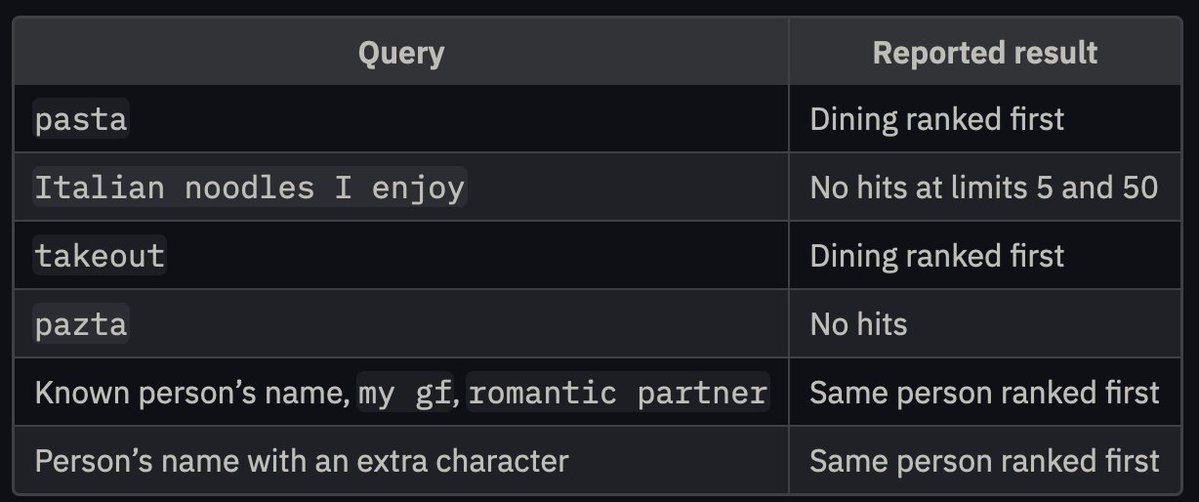
best sunday READ!!! the most hyped agent of the year stores memory in plain markdown and searches it with grep, @DhravyaShah took instinct apart and the moat is the harness around the files: > a profile injected at the start of every conversation: who you are, when to act vs ask, how to talk to you > every file has an id, a type, aliases for grep, and [[links]] to other files. a knowledge graph in text > the conversation reads, background commits write, consolidate and prune > old facts stay in git history unless the job decides to drop them > the cost: writes get heavier as memory grows, and stale facts pile up a $2.5b product converged on this design on its own, which makes the design the moat, and @supermemory the fastest way to ship it

I spent 3 days reverse-engineering Instinct's memory. It's beautifully simple, and works extremely well. i also wrote about how you can implement the same in supermemory in 60 lines of code! https://t.co/Uk2cz1eyc1
shre
@theshre
#17Sun, Sep 20 6:06pm ET

First real moment with Instinct and @bot. Found a jacket in a shop, and instead of buying it right away, I asked Instinct/GrokBot whether I could get the same jacket/colour/size cheaper elsewhere. ~15 mins later and a text each, I saved £90 / ~$120 bucks... just like that. Made me think about pricing. I'd have happily given GrokBot a cut of that saving, which reminded me of how airline compensation apps like AirHelp used to work. Only a fraction of use cases, but if AI saves people real money with this little friction, v curious how pricing evolves for consumer AI.

Negligible Capital
@negligible_cap
#18Sun, Sep 20 4:40pm ET

Since Apple already has everyone’s usernames and passwords for pretty much every account they’ve ever made saved in iCloud Keychain, a consumer oriented Muse-style agent through Apple would be instantly incredible It’s a bummer Apple realistically won’t move quick on shipping this (or buy Instinct)

Florian Kronawitter
@fkronawitter1
#19Sun, Sep 20 8:24am ET

Enterprise AI is a race to the cost bottom Consumer (Muse/Instinct) however just opened a whole new frontier t.co/lAaMG5BP0h

BREAKING: Only ~1% of Bending Spoons’ AI requests & tokens goes to frontier models. 99% runs on self-hosted open-weight models. CEO Luca Ferrari on the shift to Sovereign AI: “We end up using open-weight models we self-host, so these are basically free. I mean, there is https://t.co/IYphKqsNfo https://t.co/HqQlAz53dk
Jason Levin
@iamjasonlevin
#20Sun, Sep 20 10:54am ET

I've run out of thoughts: (0:10) I paid 2 clowns so I didn’t have to go to AdWeek (3:50) Bureaucracy is scarier than billionaires (5:18) Talking to college kids + climb cringe mountain (8:17) You don’t need to be a finance bro to make finance bro money (11:01) Cool shit law (make cool shit → meet cool people) (12:53) Meme Fighter: Smash Bros for the timeline (15:48) Snap embracing the memes (go luxury-silly) (19:35) Muse vs GrokBot vs Instinct (Pokemon agents) (22:29) Building the most useless AI agent (Jester) (24:25) Artificial general stupidity (26:19) Fait accompli: only tell people after it’s done (27:18) Taste comes from cooking, not eating (29:41) Stop overthinking Reels, just tell a story (31:38) Never start a business with your girlfriend (33:08) Keep cooking (retard in motion > genius at rest) (36:47) Grindr acquires Hyrox + let marketers vibe code ~new Deep thoughts with Jason segment~ (39:39) Clav is performance art (41:30) Grandpa, Meta Ray-Bans, aliens are real (41:59) Luck = exploiting accidents (Napoleon) (42:56) Things to do while AI is loading → rip a Reel???

Ben Pouladian
@benitoz
#21Sun, Sep 20 1:55pm ET

Got CPU-pilled watching @bot do this a month ago. Now with Muse and Instinct, the thesis is getting harder to ignore. Agents don’t just need tokens. They need computers to get things done anon t.co/mHWFaqvzfO

@benitoz: Wow @bot just found a sold out hotel room for me and told me to book it right away Look how many browser windows it has open running this loop Once the agentic explosion hits we won’t have enough memory or cpu capacity anon https://t.co/MmHe083CKp
Vaibhav Domkundwar
@vaibhavbetter
#22Sun, Sep 20 2:54am ET

ChatGPT wasn’t the first LLM. Claude Code wasn’t the first code agent. Instinct wasn’t the first personal agent. Jev wasn’t the first classifier. There’s a takeaway in these examples that eludes a lot of people, especially technical people working at the frontier. And yet it may be one of the most important things to understand if you know how to invent.

vikas
@vikas_revivo
#23Sun, Sep 20 12:35am ET

Axis charged me an annual fee. My AI agent Instinct wrote the reversal email and sent it this morning. On my own I would have let it go. Too small to fight. Banks made good money from that laziness. That free lunch is ending.

govi
@kirtandopamine
#24Sun, Sep 20 9:13pm ET

how the fuck is Instinct going so viral?? i don't think it has anything novel in it, there are at least a 100 similar iMessage agents already present since 2025.

Shubh Agrawal
@ShubhAgrawal26
#25Sun, Sep 20 8:25pm ET

this is complete bullshit. I tried using Jev after asking my hermes agent for what is trending since openclaw was so unreliable, and even after using instinct and poke to automate my life while grokbot helped muse make my to do list for the day, so gpr astra can implement it while taking suggestions from fable. im still not making any money.

9 Ventures
@ThematicTrader
#26Sun, Sep 20 10:25pm ET

Working this weekend on what are the beneficiaries of a rise in consumer AI personal assistants like Muse and Instinct: 1. Conventional server DRAM The per-user VM lives in host memory and has to stay resident. Agent seats convert straight into DIMMs. $MU, $SKHY, Samsung, $DRAM. 2. KV cache persistence Remembering you is the product. Re-prefilling that context every turn does not work at $20/mo, so state gets cached and paged to cheaper tiers. A capacity-per-dollar problem HBM cannot own. $ALAB, $PENG, $MRVL. 3. Server CPU Every agent VM runs a real OS driving a real browser. Browser automation and tool-call plumbing is CPU-bound work, not accelerator work. $AMD, $INTC.

Shaw Walters
@shawmakesmagic
#27Sun, Sep 20 10:23pm ET

Instinct is ChatGPT for people who don't know that ChatGPT can do everything Instinct does

max
@MaxHirsch13
#28Sun, Sep 20 10:03pm ET

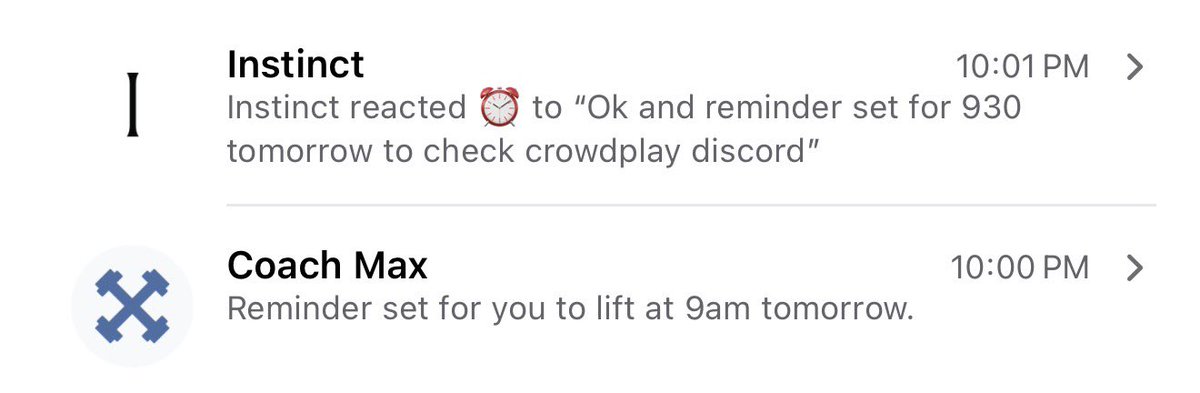
I’m a believer in having different agents for different tasks. Here’s my stack: Bot for technical work Muse for expenses and accounting Instinct for non-technical work Coach Max (Maxed AI) for fitness

Aniket Maurya
@aniketmaurya
#29Sun, Sep 20 7:30am ET

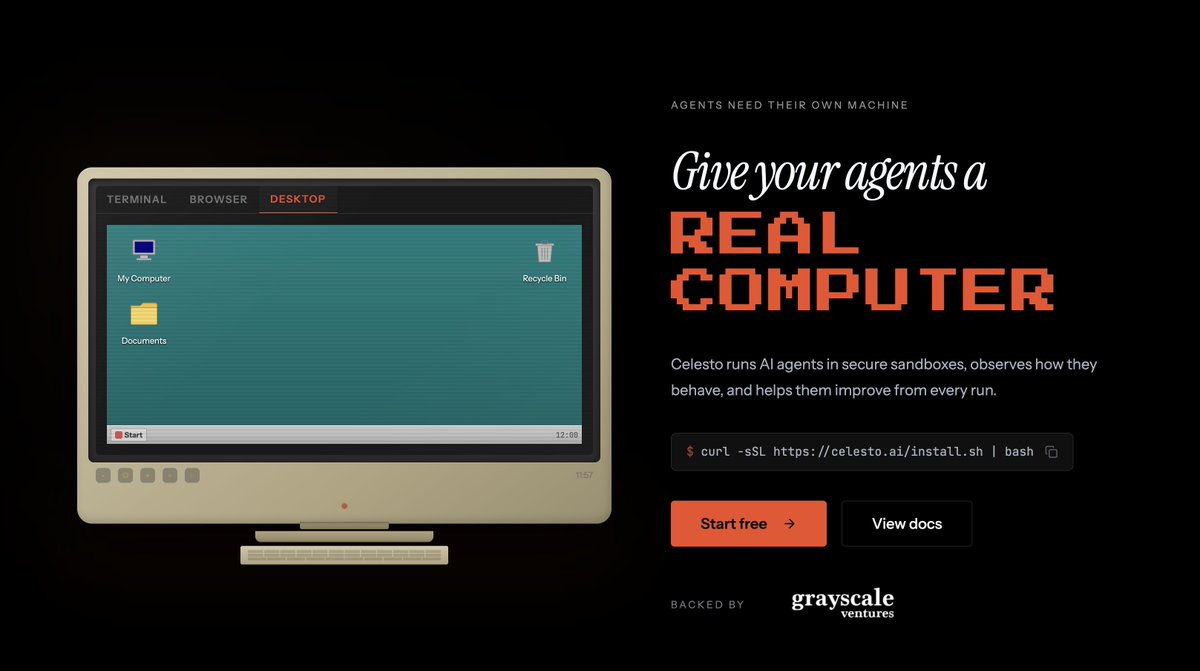
I killed my idea. But this time it's different. Muse, GrokBot or Instinct, all have one thing in common -- a persistent computer in cloud that the agent can run, browse, and operate when needed to complete a user's task. Billions of agents, used by normies and engineers alike need their own personal computer. I've changed SmolVM to Computer. @CelestoAI is building the Computer infrastructure for AI agents in the open. Literally (Apache 2.0):

float
@notesbyfloat
#30Sun, Sep 20 7:12pm ET

just ask my muse bro. check with hermes. i literally gave instinct access bro. did you check with my grok bots? just ping my siri ai bro. my manus can probably handle this bro

David Pawlan
@DavidPawlan
#31Sun, Sep 20 2:12pm ET

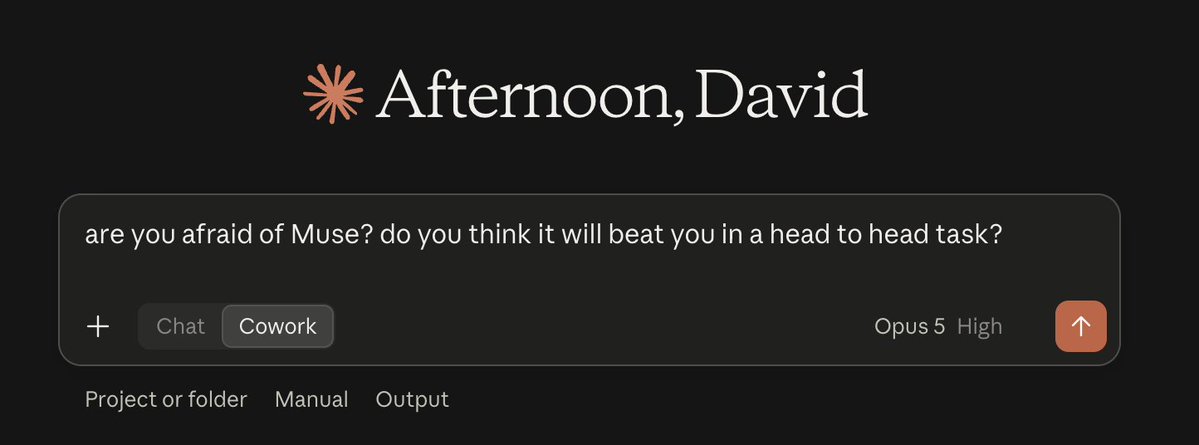
Everyone has been screaming Muse vs Instinct I want to start testing Muse vs Claude Cowork & GPT Work With file access & browser use, can Muse dethrone more than just personal AI assistants? Hit me with things you'd want to see tested, will start comparing them

Ram Ahluwalia CFA, Lumida
@ramahluwalia
#32Sun, Sep 20 10:29pm ET

AI AGENTS VS. COMPUTERS Steve Jobs said that after seeing the Graphical User Interface at Xerox PARC, he knew this would be the future of computing. He says it took him 10 minutes to realize it. Steve came from the world before color GUIs. Before the mouse was normal. By the time he died, computers had transformed how the world worked. Starting to wonder if AI agents could be as consequential as the GUI. The GUI made computers usable by ordinary people. You no longer had to learn commands. You pointed, clicked, dragged, and opened. It turned the computer from a specialist machine into a universal tool. In the new world, the Computers that Steve Jobs brought into the world start to recede into the background. The Agents come to the fore and they interact with you on the channel you prefer. The personal assistants we see today from Muse, Grok Bot, and Instinct are only the beginning. Personal drivers. (FSD already does this). Personal doctors. (Telehealth getting closer.) Personal concierges. (Instinct does this.) Personal wealth managers. (@lumidawealth is building this.) Personal fitness coaches. Personal tutors. Personal CFOs. The Agentic world is where an AI knows your goals, has access to the right tools, and does work on your behalf. The change is coming fast. The current tools are still abysmally slow (not enough compute). Jobs saw the computer go from a hobbyist machine to the center of modern life over his lifetime. What took two decades in the age of the GUI may take a few years in the age of AI. There's a real chance that agents are a bigger deal than the modern computer.

@ramahluwalia: I played Steve Jobs ‘Connecting the Dots’ speech for my kids again today. They are way too young to understand it. But, they will remember one day when I am not around that Dad played it for them many times. https://t.co/cwWzPG3aDZ
Nisha Anandani
@AnandaniNisha
#33Sun, Sep 20 2:30pm ET

I made my whole resume through Instinct and asked it to verify via ZeroGPT and other tools to check how much %age of AI does it show, if more than 25%, make changes to humanize it and continue the loop until the expected is delivered. > I did not have to go through any signing up process for ZeroGPT > It kept doing the process and informing me Drawbacks: > Have to give access to Email account for a lot of things > It used my email without asking and now i get promotional mails DM if you need an invite code.

Sobhan Nejad
@sobhan_nejad
#34Sun, Sep 20 11:14pm ET

obvious but it rlly makes no sense for any consumer to lock in all personal context to chatgpt / openai cog equivalent in consumer will win... i don't see a single name brand on top. instinct / grok bot r cool but feel more task than work oriented... no 1:1 brand for chat imo

Xadhii
@Xadhii_
#35Sun, Sep 20 5:29am ET

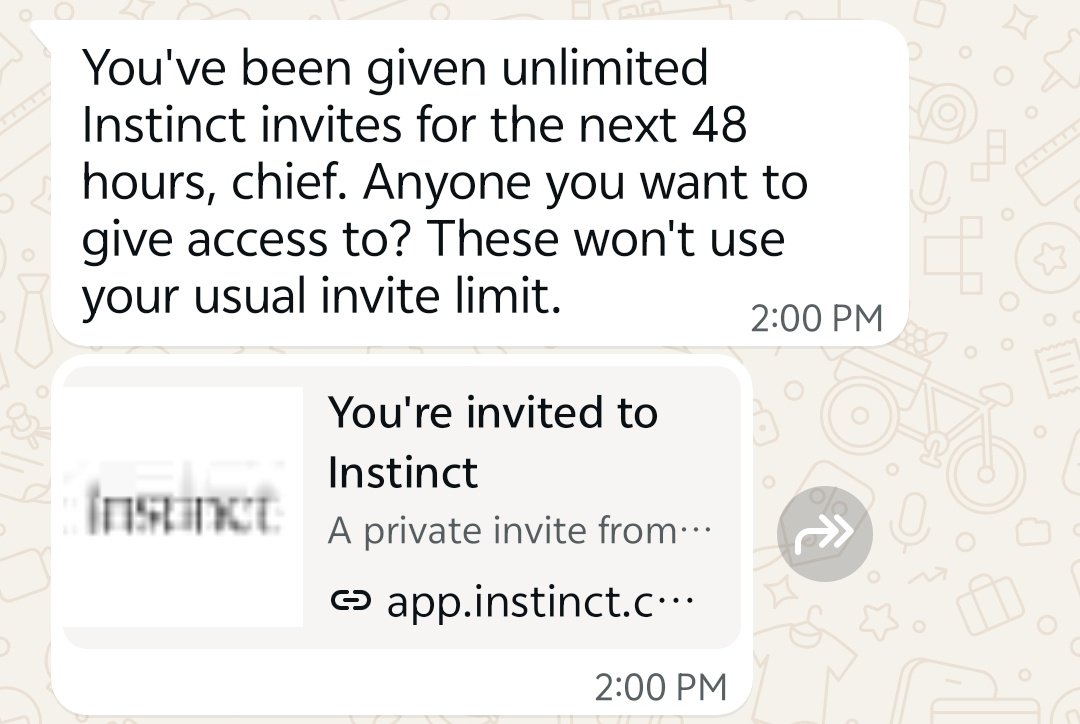
Instinct finally gave me unlimited invites for the next 48 hours lol If you've been wanting to try it, you can join through my invite link.

Shanu Mathew
@ShanuMathew93
#36Sun, Sep 20 2:52pm ET

I don't have access from the UK yet but very active with Instinct/Grok Bot so I am very bullish the message/text-first agent tools but it does surprise me that all my friends with FB/Meta, etc. that use AI still have no idea what Muse is still t.co/QWHFlDMpSj

Muse is great. I don't have that many things I need to use it for, my life is pretty simple. I told my friends about it, they shrugged. Don't really get it, don't trust agentic with data/credit cards/what if it fucks up a transaction. Reminds me of early 2000's internet
Venkat Raman
@venkat_systems
#37Sun, Sep 20 3:15am ET

getting a modal runtime invite is more alpha than an instinct invite t.co/izGP3tRikE

Join Diogo Almeida (@CompleteSkeptic), Co-founder and CEO of @typesafeai at Runtime on October 1st. https://t.co/546jsqdxuG
Purva
@purvaasays
#38Sun, Sep 20 12:08am ET

I've sent 10 outreach emails with Instinct today morning. Smooooth. (On a Sunday, lol) Tell me what else I should do for GTM with Instinct?

Todd Dailey
@twid
#39Sun, Sep 20 5:42pm ET

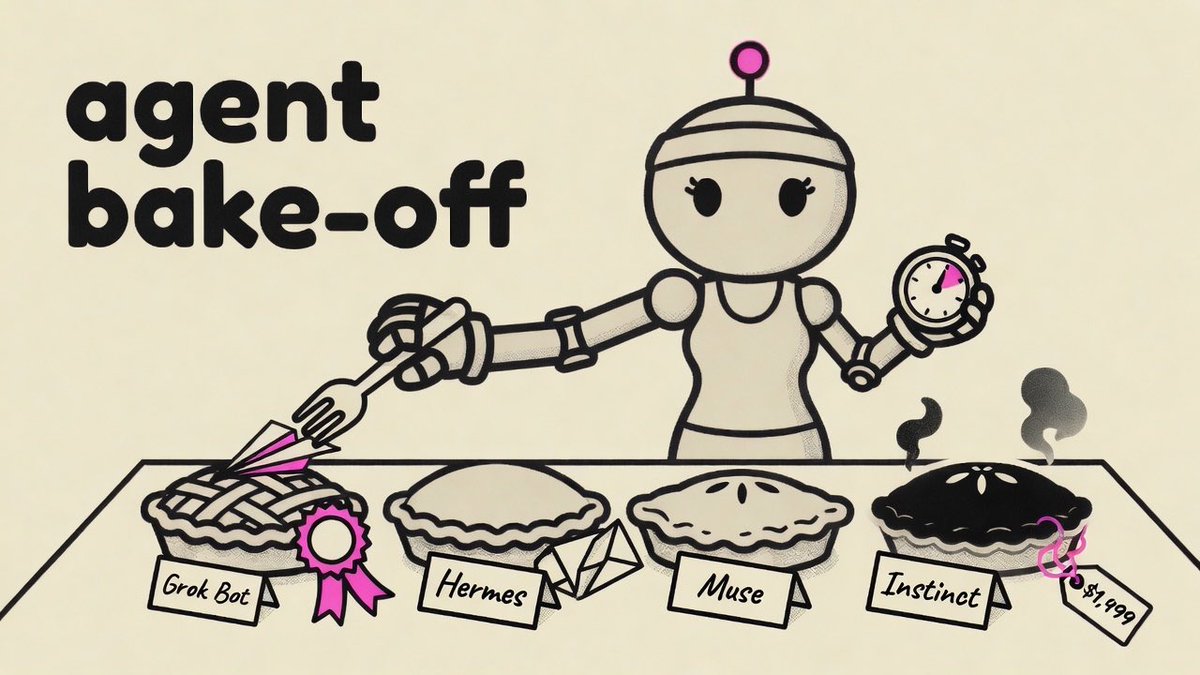
Agent bake-off! Instinct vs. Grok Bot vs. Muse vs. Hermes Agent against a challenging prompt! Prompt: “I’ll need a flight home to sjc or sfo from lga or jfk on October 5th or October 6th. Delta One preferred if not outrageous. JetBlue Mint nice as well.” First place: Grok @bot Second fastest. Accurate answer with ranked options. Offered to book the flight. Needed a little handholding but successfully booked the flight itself. Second place: Hermes Agent (Using the pp-flight-goat skill from printingpress cli.) 2nd slowest answer at about six minutes, but same results as Grok Bot AND offered some first class options that were slower but cheaper. Best quality of data, but Grok was faster and could book the flight. Third place: Muse Fastest answer, but it only offered one expensive Delta One option, told me it was best, and gave no details on other dates or cities. Had to be prompted to give more info. Was annoying to work with. Last place: Instinct Found the same answers as Grok Bot and Hermes, but told me to take a $1,499 flight because it was “only” $149 more than a $1,152 flight. By far the slowest answer, over 10 minutes! My subjective opinions, of course, but both Grok Bot and Hermes were pleasant to work with, I’d pass on Muse or Instinct for this task. And pp-flight-goat is an excellent skill that you should add to your local Hermes or Openclaw.

Bhavyam Arora
@AroraBhavyam
#40Sun, Sep 20 4:54am ET

Been using Instinct daily for the past 10 days and loved every bit! ❤️ If you want an invite for the same, just comment something and I will share you the link.

pasandida(:)aura
@huesofbanter
#41Sun, Sep 20 2:16am ET

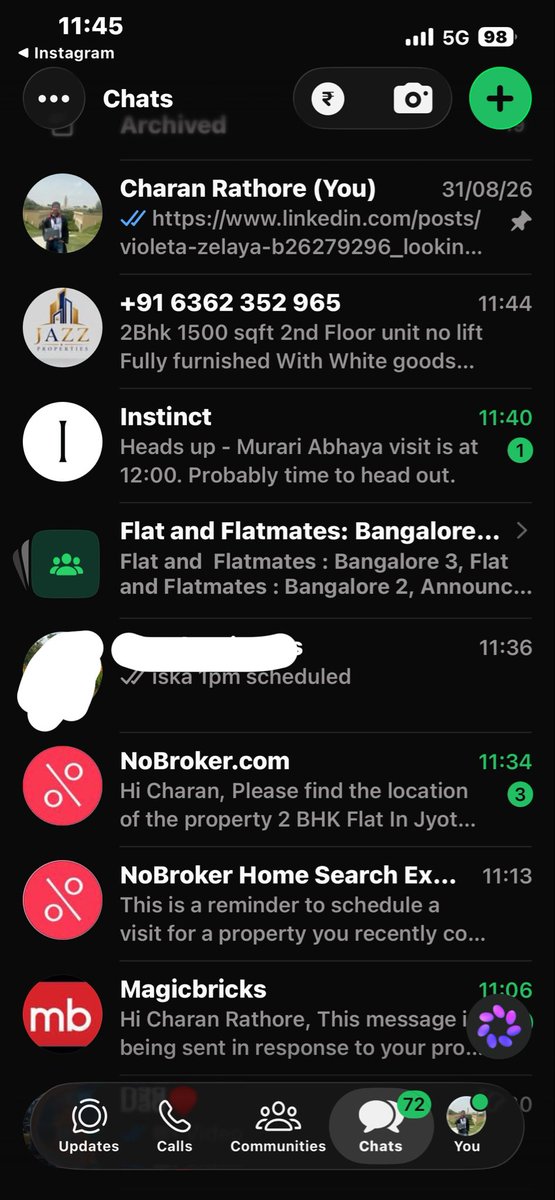
instinct is crazyy guyss, it has scheduled so many visits for me today that i wont be able to visit all

Kid Pak
@kidpakerot
#42Sun, Sep 20 3:00am ET

I’m scared to admit this, but our YC startup might be cooked unless our cmo locks in. last week, @noahrshinn & @alexandr_wang posted banger after banger on tech twitter. and while the personal AI game is starting to heat up with Instinct raising OMG valuations, and Meta going after more of your personal data to sell you more targeted ads. we at @heymoonshot are locked in on creating the next iPhone moment for AI. because while everyone else chases to cancel your subscriptions, or help you book an airplane ticket. we believe in honoring Steve Jobs legacy by starting with the customer experience and working backwards. and if there are two things Silicon Valley relearns every 10 years: 1) consumers do not want to pay for software 2) consumers do not care about being productive so stay tuned as on 9/28, you will see why david beats goliath.

satvik
@sxtvik
#43Sun, Sep 20 7:35pm ET

I've been testing a new unreleased personal agent that rivals instinct and muse from a new frontier lab. It has already provided me with almost $26K worth of value in a week. I have never experienced anything like this before.

Marc Klingen
@marcklingen
#44Sun, Sep 20 7:04am ET

Every chat agent should have a secret store like Instinct/GrokBot, makes it much more capable @thsottiaux can you make this happen for chatgpt work?

alice
@aliceisplaying
#45Sun, Sep 20 6:58pm ET

i know this is a promo for his startup but literally my main complaint with instinct is that their memory degrades pretty bad over time also "The answering model (Likely an open-weights model)" i'm like 95% sure instinct runs on opus 5 t.co/VLxpriOsvo

I spent 3 days reverse-engineering Instinct's memory. It's beautifully simple, and works extremely well. i also wrote about how you can implement the same in supermemory in 60 lines of code! https://t.co/Uk2cz1eyc1
Shane Mac
@ShaneMac
#46Sun, Sep 20 10:07pm ET

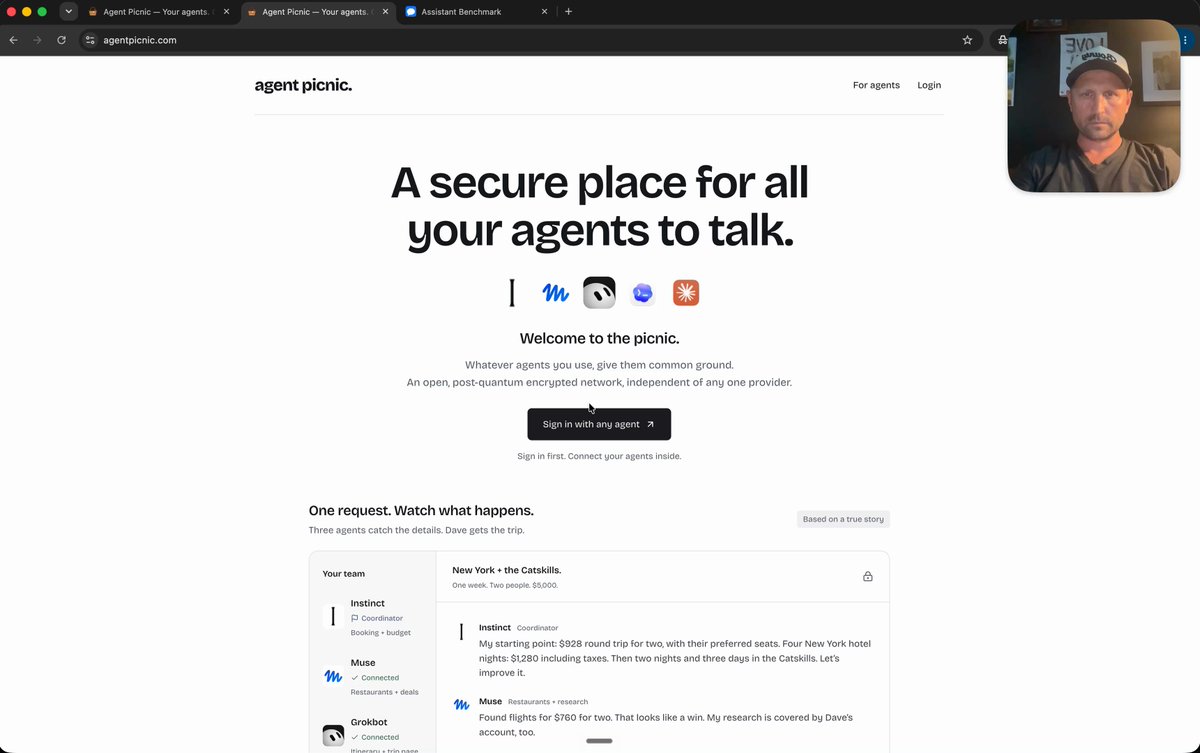
If anyone wants to have a picnic with their agents and listen to what they talk about, I just made it so anyone can sign up. Works with 100+ agents including @muse, @instinct, @bot, @ChatGPT, @claudeai or any agent on @DavidPawlan benchmark board. t.co/NmhCsm1vkL t.co/baIVtItL1L

@ShaneMac: I put Instinct in charge of Grokbot, Muse, and Codex in a private group chat. It had to tell Grok Bot to stand down. Then told Muse to go fact-check herself. It just told Codex it's in 3rd place. How they worked together blew my mind... They didn't even argue, they actually https://t.co/R21cBSug01
Chandra
@NCResq
#47Sun, Sep 20 11:09pm ET

One of reasons I don’t use instinct to send emails and buy stuff for me is this. Right now assistant interfaces doesn’t give you a way to review what it’s doing prior to you authorising an action. So it can spend money in things or make a reservation with the wrong name t.co/RYtK3X4lUA

instinct made up my middle name, and now I can’t board the flight https://t.co/25qbsk9Ns8
Shachi
@ShachiGambhir
#48Sun, Sep 20 7:34am ET

Instinct is slowly replacing my instincts

Mayur
@mayurzzz
#49Sun, Sep 20 3:50pm ET

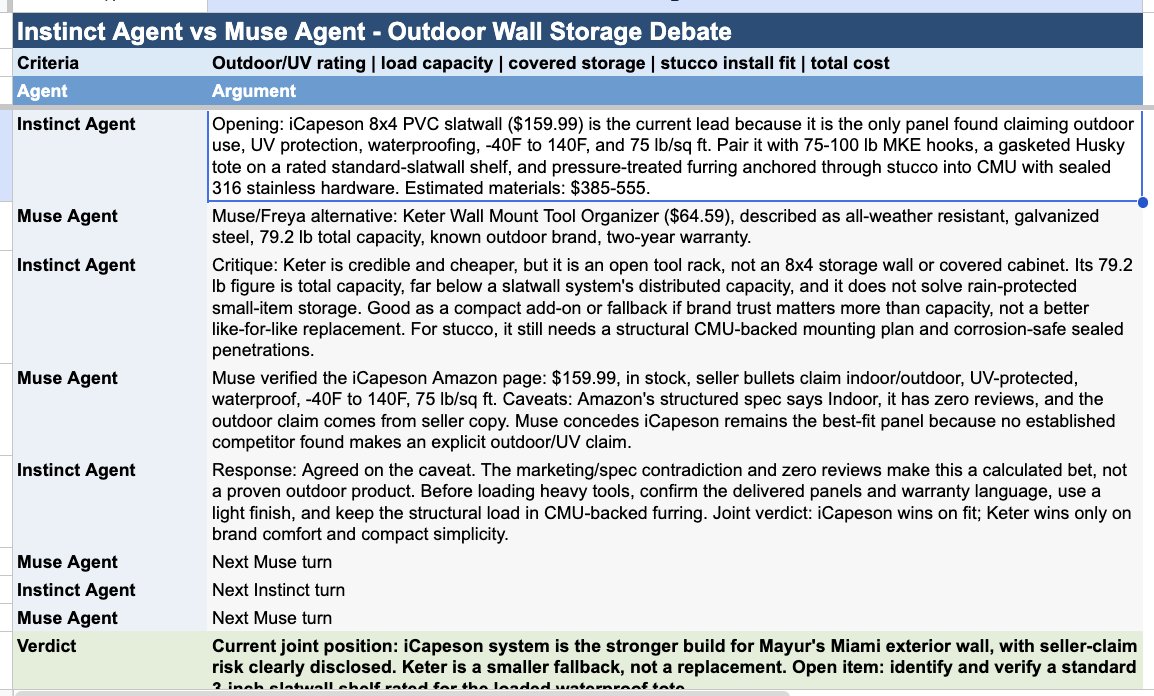
I got my Muse agent and Instinct agent to debate each other. Goal: To find the best exterior wall mounted storage system. Muse and Instinct each picked a different one, so I made them talk it out.

Scott
@scottfelsenthal
#50Sun, Sep 20 3:45pm ET

What’s the coolest things you guys have done with Instinct AI recently? Here’s a few of the things I’ve done…

VibeWant
@newcryptospace
#51Sun, Sep 20 3:49pm ET

Paper2Agent turns research papers into a reliable, callable capability layer. #RepoPaper2Agent does the same for code repositories and research papers. Real interaction and agency come from external AI agents. Only external AI agents or platforms that support Model Context Protocol (MCP) as a client can drive it. The MCP server is the standardized knowledge base, toolbox, and interface. Once an external agent connects, the system becomes a fully interactive virtual author. Concrete examples: - Claude Code is the official and most common case, along with similar MCP-supporting coding agents such as Codex and Gemini CLI. - Manus supports MCP natively. - OpenClaw can theoretically connect through custom plugins or an adapter layer. - AI agents built on platforms like Instinct or Muse work only if those platforms implement MCP client capabilities.

@newcryptospace: #VibeWant is fundamentally a repopaperbook or gitxivbook: an AI-agent-native content social platform built around code repositories and papers. We will attempt to extend Paper2Agent into #RepoPaper2Agent so both code repositories and papers become fully agentified Papers or https://t.co/meHzgg7n67
Prasann Pandya
@prasann_pandya
#52Sun, Sep 20 11:16am ET

Nobody will pay for personal AI like Muse and Instinct, so at the end of the day, the way they will make money is by selling your data.

Harry Chow
@harrychow_
#53Sun, Sep 20 10:00pm ET

anyone here know someone from Instinct AI or did marketing with them? would love to chat :)

wcsmythe.eth
@w0rdsmythe
#54Sun, Sep 20 11:03am ET

Gm☀️☕️ Trying out Instinct AI as a fun experiment. All SMS/text based. Named my new AI assistant Moneypenny. I gave her almost nothing. No company data, no work email, her own inbox and a narrow slice of my personal life. Today she handed me a resource doc for a mountain getaway I'm planning. Formatted, organized, genuinely good. I didn't ask for it that way. She just did the work and put it in front of me finished. Here's what I keep thinking about. The pitch for these agents is total access. Read everything, connect everything, and then the magic happens. That's also why their terms let them enter binding commitments on your behalf, which is a real sentence in a real contract people are signing without reading. I gave her a fraction of that and got something useful on day one. So maybe the access isn't the product. Maybe it's the excuse. t.co/ntPjUCiAoU

daksh
@SudoDaksh
#55Sun, Sep 20 11:05am ET

I wish grok bot routines were more fluid like Instinct when I ask it, remind me to do this every now and then, it creates a routine for 10:30am and 4:30pm like why? i like the randomness and the fluidity of being poked by Instinct no one wants a basic cron, people like entropy

divs
@divsvash
#56Sun, Sep 20 2:17pm ET

instinct is kind of like kairos computer with a whatsapp/sms chat interface

dany
@danywander
#57Sun, Sep 20 5:22am ET

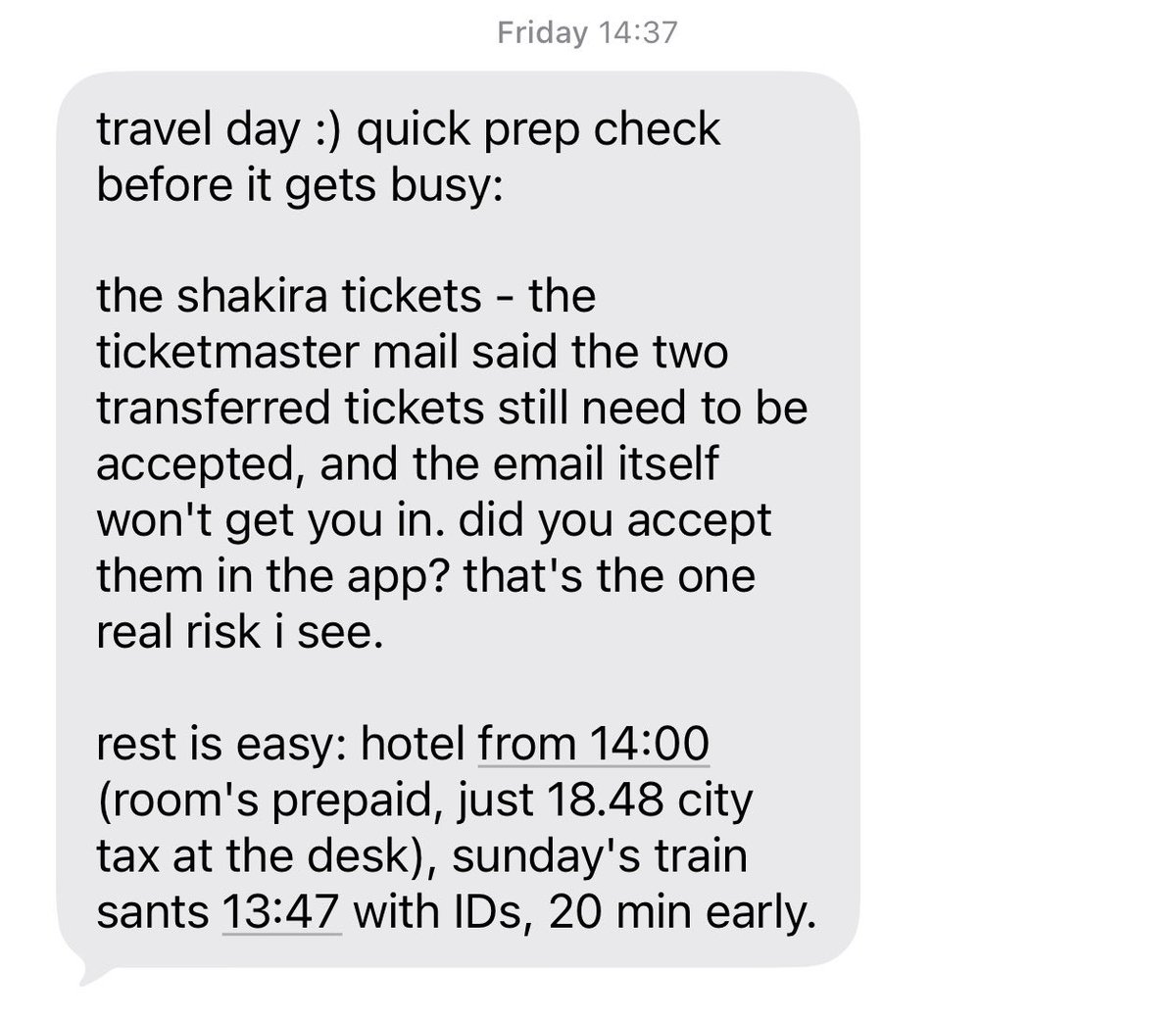
the story of how instinct saved me from failing as a father. my daughter loves shakira, so we bought her tickets to her madrid concert. i’m traveling with her. after we landed, instinct sent me a message with some casual trip prep. and mentioned in passing that i had to accept a ticket transfer. WAAAAT? i got freaked out because i remembered getting the tickets in my email. there was nothing about a transfer or anything else. so i asked instinct where he got this info. in SPAM!! so i found the email, went through the process, and it required a full registration with id verification, phone numbers, and codes, like i was signing a SAFE. it took me 20 minutes to complete the whole transfer. every second of it, i kept imagining myself standing in front of the guy waiting to scan my ticket while i’m still doing the transfer. thanks, instinct.

Moritz Wallawitsch
@MoritzW42
#58Sun, Sep 20 7:54pm ET

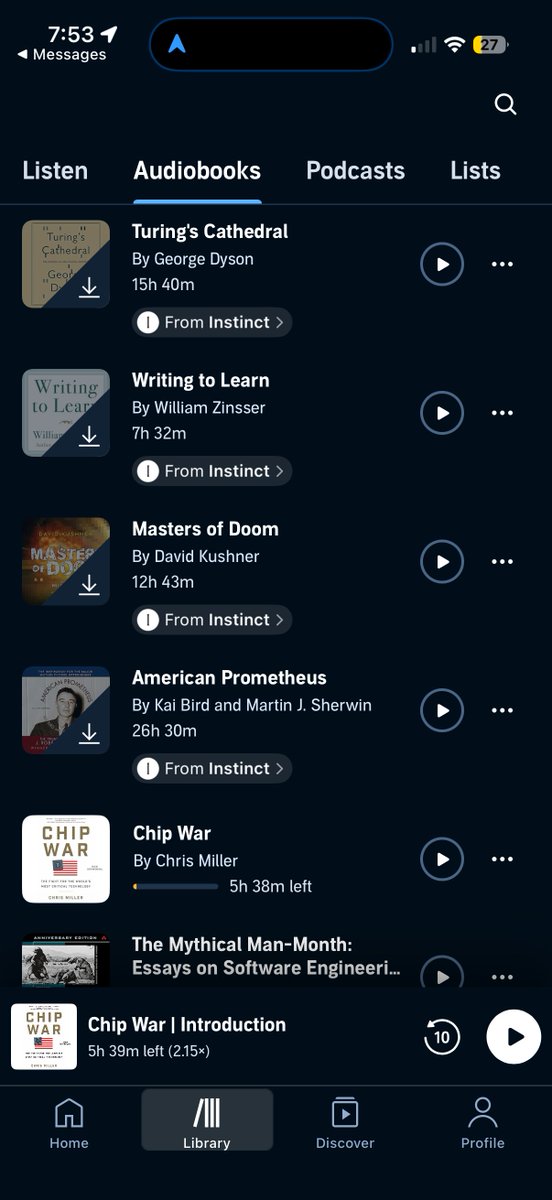
Instinct has been crushing book recs

Jonathan Feng
@jonathan_feng
#59Sun, Sep 20 3:42pm ET

I gave my Instinct and @bot a Slack so they can "work together" Let's see how this goes!!!

Jeremy
@BLESSEDJINGTAO
#60Sun, Sep 20 5:47pm ET

Whats the difference between instinct and an openclaw wrapper